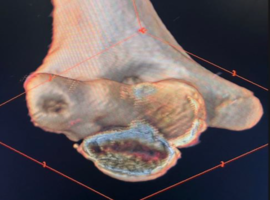
Background: Osteochondral autograft transfer (OAT) is an established treatment for unstable osteochondral lesions of the humeral capitellum, but the choice of donor site remains unresolved. Conventional donor sites are anatomically distant from the elbow and carry recognised morbidity, which has driven interest in ipsilateral alternatives.
Objective: To review the published evidence on donor-site selection for osteochondral reconstruction of the capitellum, including clinical outcomes, donor-site morbidity, ipsilateral donor options, non-articular autologous bone grafting, and the anatomical constraints of the medial epicondylar region; and to illustrate the resulting principles with a surgical case.
Methods: A structured search of the indexed literature was performed in September 2026, covering clinical outcomes and donor-site morbidity of osteochondral autograft transfer, ipsilateral and extra-articular donor alternatives, and the anatomy of the medial epicondylar region. Findings are synthesised narratively by donor site.
Results: Return to sport after OAT for capitellar osteochondritis dissecans (OCD) is reported in approximately 97% of patients across 24 studies and 470 patients. Donor-site morbidity is 7.8% for knee harvest and 1.6% for costochondral harvest. Two ipsilateral intra-articular donor sites, the non-articulating portion of the radial head and the lateral olecranon tip, have been validated topographically and histologically but not clinically. Non-articular autologous bone from the ipsilateral olecranon has been used successfully in bone peg grafting for early-stage lesions. No published report was identified describing the medial epicondyle as a donor site for capitellar reconstruction.
Conclusion: The evidence supports a hierarchy in which cartilage-bearing donor sites are used to restore the articular surface and non-articular autologous bone is used to restore the subchondral unit. Any extra-articular donor site within the medial elbow must be evaluated against the ulnar nerve, the ulnar collateral ligament origin and the medial epicondylar apophysis, particularly in skeletally immature patients.
Keywords: Capitellum; Osteochondritis dissecans; Osteochondral autograft transfer; Donor site; Elbow arthroscopy; Medial epicondyle; Bone peg grafting; Skeletally immature elbow