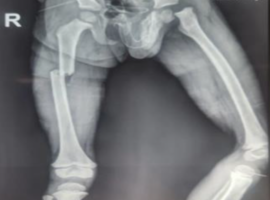
Introduction: Paediatric polytrauma is uncommon, and the simultaneous presence of multiple long bone fractures with a proximal femoral physeal injury is exceedingly rare. Proximal femoral epiphyseal (Delbet Type I) fractures account for less than 1% of paediatric femoral neck injuries and are associated with a high risk of avascular necrosis. When combined with multiple limb fractures, craniofacial trauma, and cerebral oedema, management becomes particularly complex and requires coordinated multidisciplinary intervention.
Case Report: We present the case of a 3-year-old boy involved in a pedestrian motor vehicle accident who sustained a rare constellation of injuries, including bilateral humeral fractures, a right femoral shaft fracture, a left Delbet Type I proximal femoral physeal fracture, a pelvic fracture, mild traumatic brain injury and an orbital blow-out fracture. Following Advanced Trauma Life Support (ATLS)–directed resuscitation and multidisciplinary stabilisation, the patient was managed conservatively for the traumatic brain injury and orbital fracture. Definitive orthopaedic management consisted of submuscular plating of the right femoral shaft, open reduction and cannulated screw fixation of the proximal femoral physeal fracture, and closed reduction with percutaneous pinning of both humeral fractures. Postoperative immobilisation and structured, caregiver-supported rehabilitation were essential due to complete functional dependency during recovery. The patient demonstrated progressive improvement on close follow-up, and at 12 weeks had achieved excellent functional recovery, ambulating independently with near-normal limb function, no pain or discomfort, and full reintegration into age-appropriate daily activities.
Conclusion: This case highlights the importance of early recognition, timely surgical intervention, and coordinated multidisciplinary care in the management of high-energy paediatric trauma. Despite the rarity of this injury pattern and the well-recognised risk of complications associated with Delbet Type I proximal femoral physeal fractures occurring in combination with quadrilateral long bone fractures, favourable outcomes can be achieved through meticulous resuscitation, appropriate operative planning, and dedicated caregiver involvement, resulting in good short- to medium-term functional outcome.
Keywords: Paediatric polytrauma; Femur fracture; Delbet Type I; Quadrilateral long bone fractures; Humeral fractures; Submuscular plating